




How to Pair Bracelets with Watches and Other Jewelry
05. Nov 2025
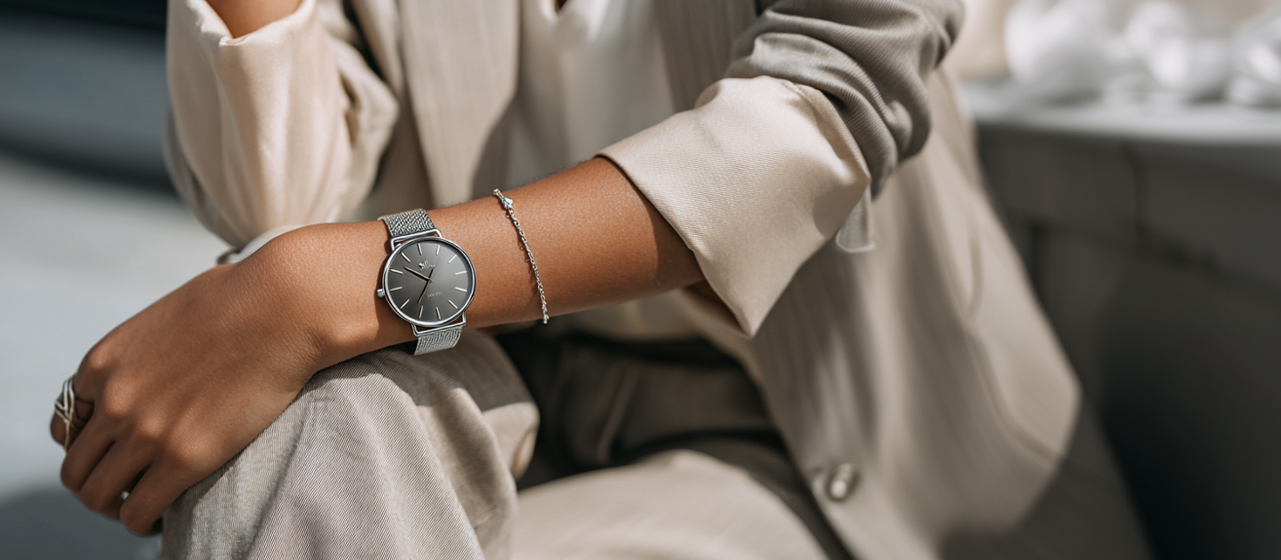
Start with a clear anchor
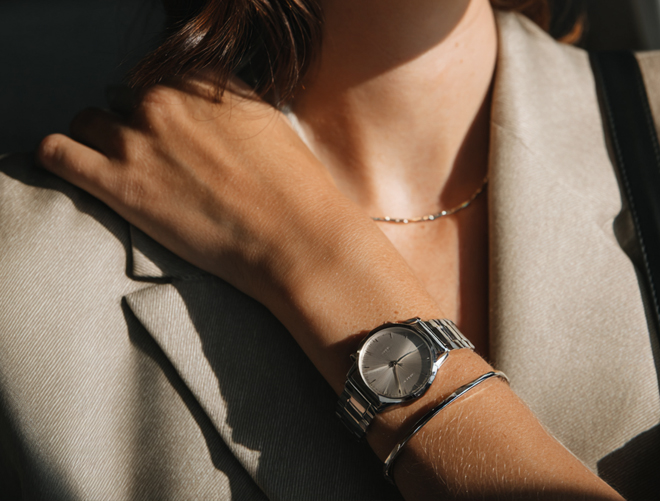
A watch sets the composition. Treat the case as the focal element and build around its diameter, thickness, and metal. A 36–40 mm dress model with a 7–10 mm profile pairs well with a slim 1.2–2.0 mm chain bracelet or a low, oval bangle in 14-karat yellow gold. Large sports pieces above 41 mm accommodate a 3–4 mm curb link or a softly contoured cuff in platinum 950. This shows that proportion, not price or logo, directs balance on the wrist.
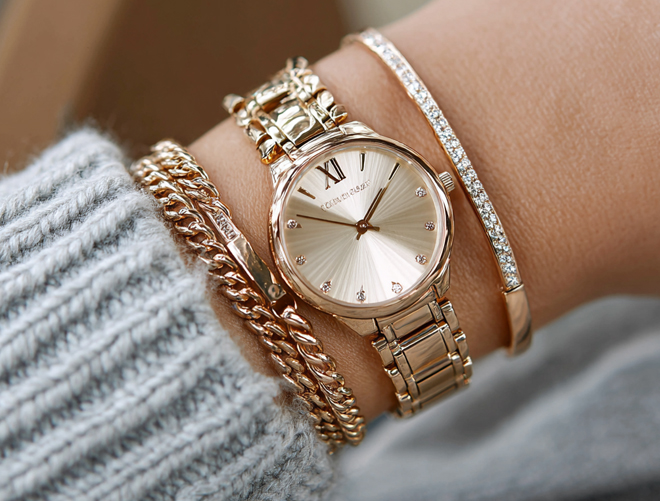
Align metals and finishes thoughtfully
Harmony begins with tone. Yellow or rose alloys complement champagne dials and gilt hands; rhodium-plated 18-karat white gold or platinum 950 supports silvered or sunburst blue dials; 925 sterling silver suits brushed steel cases. Keep one finish dominant. A satin bangle beside a brushed bezel feels coherent, while a single high-polish accent adds lift without glare. Matching clasp color to the watch hardware removes visual breaks.
Control spacing and stack height
Space guards comfort and legibility. Leave 3–5 mm between watch and nearest piece so crowns and pushers move freely. Keep total stack height under the case thickness to avoid knocking against desktops. A practical trio reads clean: watch, 1.5 mm chain, 2.5–3.0 mm link. Place the heavier item nearer to the hand to stabilize movement, then graduate thickness as you move up the forearm.
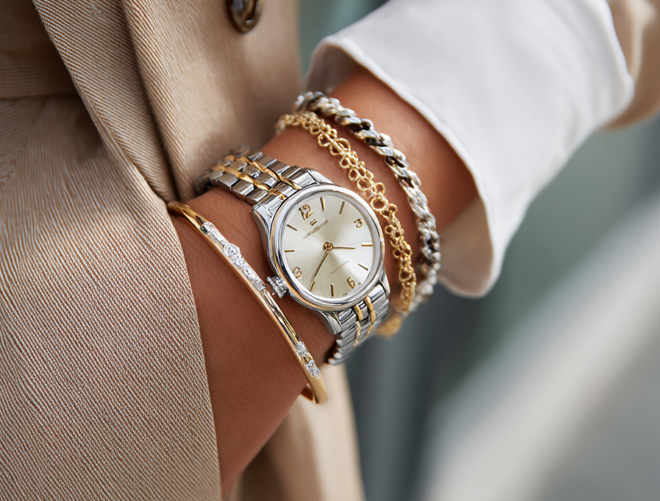
Work with straps and textures
Strap material shapes the story. A calfskin band favors fine chains and satin bangles that won’t scuff leather. An integrated steel bracelet tolerates a 3–4 mm paperclip link or a rounded curb with similar sheen. Rubber straps appreciate contrast – try a matte 14-karat gold bangle with softly beveled edges for sport-to-city days. Texture repetition builds rhythm: brushed watch links echoed by a hammered cuff feel intentional.
Secure, quiet engineering
Mechanics determine ease. Choose a lobster clasp for light chains up to 5 mm; choose a box clasp with a safety figure-eight for tennis lines. Double-solder jump rings at stress points to reduce failure. Avoid magnetic closures near mechanical movements to protect timekeeping. A cuff should leave a 20–30 mm opening and hug after rotation onto the wrist. This shows that reliability supports style as directly as color or form.
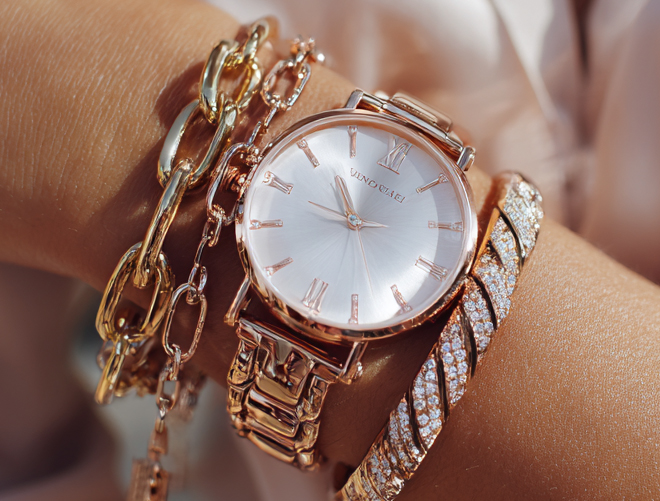
Coordinate with rings and necklaces
Hands read as one field. A signet with a flat top balances a watch better than a tall, high-set gem. Keep one textured element per hand – either a milgrain band or a rope bracelet – to prevent noise. Neckline choices guide metal tone near the face; let earrings decide the lead metal when mixing. Two yellow pieces and one platinum accent create clarity, especially when the cool element sits closest to the dial.
Use color with restraint
Gemstones near a watch work best in measured doses. A 5–7 mm bezel-set sapphire station on 18-karat white gold echoes blue dials without competing. Warm dials pair elegantly with citrine or hessonite garnet in 14-karat yellow settings. Repeat one hue twice – ear studs and a single bracelet – to unify the field. Neutral stones such as moonstone or spinel deliver presence with minimal height.
Dress codes and daily routine
Office days favor satin finishes and low profiles that glide under cuffs. Travel benefits from secure clasps and rounded interiors on rigid bangles. Evening events welcome one high-polish focal point, such as a diamond tennis line with a low four-prong setting beside a slim case. Alignment with routine turns coordination into habit rather than effort. This shows that elegance often follows function when pieces are worn for hours.
Practical sizing guidance
Measure wrist circumference just above the bone. Add 10–15 mm for close chains, 15–20 mm for relaxed drape. Keep bangles sized to pass the hand yet rest without spinning; many find 60–65 mm internal diameter right for a 160–170 mm wrist. Stacks feel balanced when thickness steps up gradually – 1.2 mm, then 2.0 mm, then 3.0–3.5 mm – rather than jumping abruptly.
Care that preserves finish and precision
Clean 14-karat gold, platinum, and sterling silver with a soft microfiber cloth after wear. Use mild soapy water for routine cleaning, rinse, and dry thoroughly. Avoid chemical detergents and ultrasonic machines for pearls, opals, oiled emeralds, and fracture-filled stones. Store each piece separately to prevent abrasion, and check clasp tension and solder points annually. Keep leather away from perfumes and lotions to prevent darkening.
A grounded insight
Successful pairing places the watch at the center, then arranges proportion, finish, and color in a deliberate sequence. Accurate spacing, dependable closures, and restrained repetition across metals or stones transform mixed pieces into a fluent composition. Jewelry assembled with this clarity becomes a calm extension of personal style – cohesive, practical, and quietly distinctive.