




How to Layer Jewelry Like a Fashion Expert
05. Nov 2025

Define a clear anchor
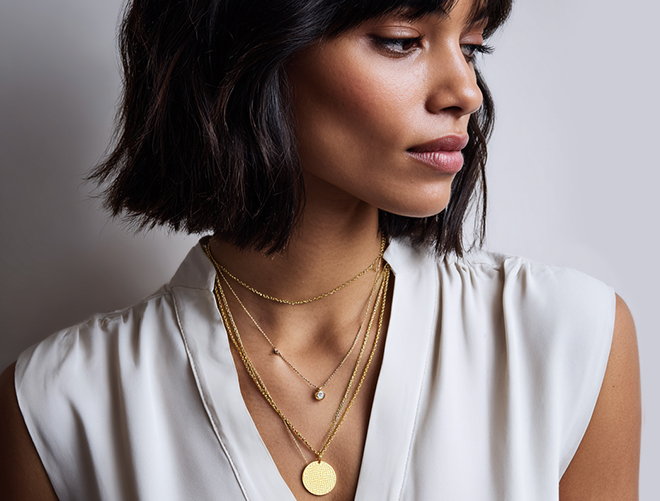
Layering begins with one stable focal point. Choose a pendant in the 12–18 mm range on a 45–50 cm chain, such as a bezel-set 5–7 mm gemstone in 14-karat yellow gold or a minimalist medallion in 925 sterling silver. Place this anchor at the center line of the chest, then build around it with shorter and longer lengths. This shows that layered styling gains coherence when one element quietly leads the composition.
Plan lengths with measured spacing
Depth comes from deliberate distance between chains. A balanced trio follows a simple ladder: 38–40 cm close to the collarbone, 45–50 cm for the anchor, 55–60 cm for a final line. Adjust by neckline: a crew neck benefits from 40–45–55 cm, while a V-neck supports 42–50–60 cm to echo the angle. A 3–5 cm gap prevents visual crowding and minimizes tangling during wear.
Vary gauges and textures
Contrast makes layers readable. Combine a 1.0–1.2 mm cable chain, a 1.5–2.0 mm box chain, and a 2.5–3.5 mm paperclip link in 14-karat gold or rhodium-plated white gold. Add texture through finishes: pair a high-polish pendant with a satin chain, or mix a hammered tag with a smooth curb link. This shows that surface detail and thickness create rhythm without adding volume.
Balance metals with intention
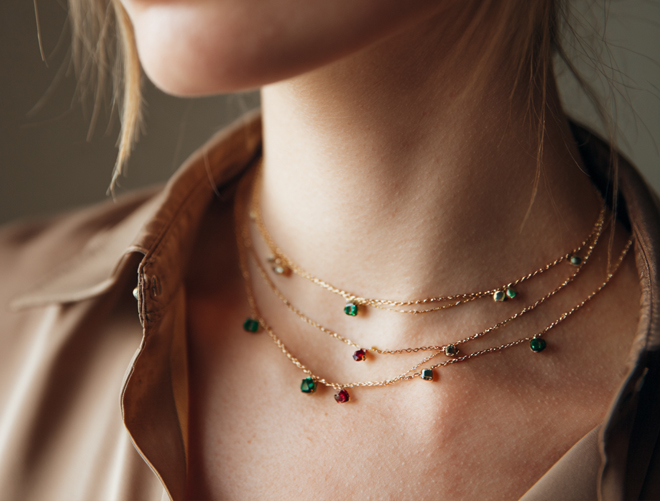
Mixed metals look refined when proportions are controlled. Keep one metal dominant – such as 14-karat yellow gold for two chains – then introduce a single 18-karat white gold or platinum 950 accent near the face for brightness. Maintain consistency in clasp color to avoid visual breaks. Sensitive skin benefits from nickel-free alloys and solid 14-karat or platinum components that contact the neck.
Use pendants to set the mood
Symbols and stones guide the style message. A geometric bar in white gold feels graphic; a natural pearl drop on 14-karat rose gold softens sharp tailoring; a 5 mm round sapphire in a low bezel adds color without height. Keep only one pendant per layer; if using two, separate by at least 8–10 cm so shapes do not collide. This shows that focal points work best when they do not compete for attention.
Apply the same logic to bracelets and rings
Wrists read clearly with a slim-to-bold sequence: a 1.2 mm chain, a 2.5 mm bangle, then a 3–4 mm paperclip bracelet. Rings stack well when profiles stay low: combine a 1.2 mm plain band, a 1.5 mm pavé half-eternity, and a 2 mm signet with a flat top. Keep one textured piece per hand to avoid visual noise. Measured repetition across hands or wrists creates a calm structure.
Respect clothing lines and occasion
Necklines dictate where metal should sit. A turtleneck supports a longer 60–65 cm chain with a larger 16–20 mm pendant; a scoop neck frames shorter 38–42 cm layers that highlight the collarbone. Daytime meetings favor satin finishes and low-profile settings that do not catch knitwear, while evening events accommodate higher polish and a single prong-set stone for sparkle. This shows that layering succeeds when it harmonizes with fabric and form.
Secure, comfortable engineering
Construction details affect both comfort and longevity. A necklace separator or multi-clasp connector keeps two to three chains parallel and reduces tangling. Lobster clasps offer reliable closure for bracelets; adjustable slider beads on 0.7–0.8 mm chains fine-tune length over delicate tops. Heavier pendants require chains rated for weight – choose a 1.5–2.0 mm gauge for pieces above 4 g to protect soldered jump rings.
Color strategy for skin tone and stones
Metal and gemstone color interact with undertones. Golden or olive skin harmonizes with 14-karat yellow gold and warm stones such as citrine or garnet; cool undertones pair well with platinum 950, 18-karat white gold, and gems like sapphire, spinel, or aquamarine. One accent color repeated twice – earrings and a pendant, or ring and bracelet – helps the eye read the set as intentional rather than assembled.
Care that preserves structure
Layered sets benefit from routine maintenance. Wipe 14-karat gold, platinum, and silver with a soft microfiber cloth after wear; clean with mild soapy water, rinse, and dry thoroughly. Avoid chemical detergents and ultrasonic machines for pearls, opals, oiled emeralds, and fracture-filled stones. Store each chain in a separate soft pouch, threading the clasp through the last link to prevent knots. Clear care habits protect finish, alignment, and the precision of small parts.
A grounded insight
Professional layering relies on proportion, texture, and function arranged with restraint. Precise lengths, measured gauge differences, consistent metal logic, and secure engineering turn a group of pieces into a single, fluent composition. Jewelry worn in thoughtful layers becomes an articulate line of style – calm, deliberate, and unmistakably personal.