




Gold vs Silver: Which Jewelry Suits Your Skin Tone Better?
05. Nov 2025

Understanding undertone and overtone
Skin undertone guides metal choice more than surface color. Warm undertones carry golden, peach, or olive notes; cool undertones lean rosy or bluish; neutral undertones balance both. A quick check helps: veins that read green suggest warmth, blue or violet indicates coolness, and a mixed reading points to neutrality. Natural-light testing matters because indoor bulbs shift perception. This shows that an accurate read of undertone creates clarity before any aesthetic decision.

What the metals actually look like
Metals differ in hue and reflectivity. 14-karat yellow gold offers a balanced warmth and reliable hardness for daily wear. 18-karat yellow gold has deeper color and slightly softer structure. 18-karat white gold rhodium-plated gives a bright, neutral sheen; without rhodium, it appears faintly gray from palladium or nickel in the alloy. Platinum 950 looks cool-white with higher density and excellent wear resistance. 925 sterling silver sits between gray and white, developing a gentle patina that many consider part of its character.
When gold flatters the skin
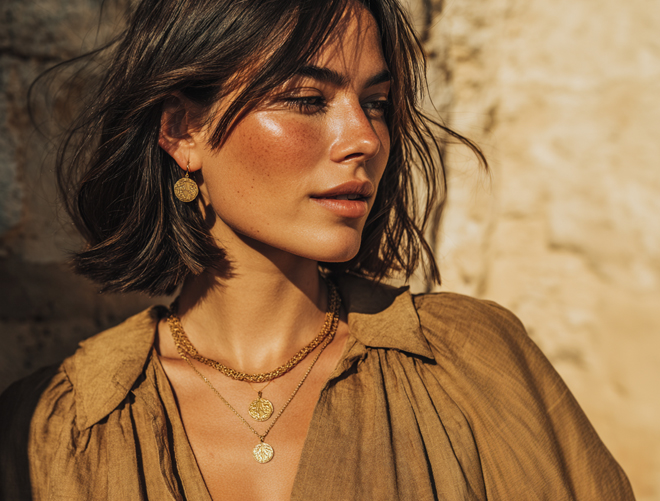
Warm complexions harmonize with yellow and rose tones. A 14-karat yellow gold pendant or 1.5–2.0 mm chain brightens olive and golden skin, while 14-karat rose gold softens freckles and sun-touched tones. Ivory clothing and camel knitwear reinforce this harmony. Pairing a bezel-set citrine or garnet with yellow gold keeps the palette cohesive. This shows that coordinated warmth across skin, fabric, and metal produces a calm, luminous effect.
When silver or white metals shine
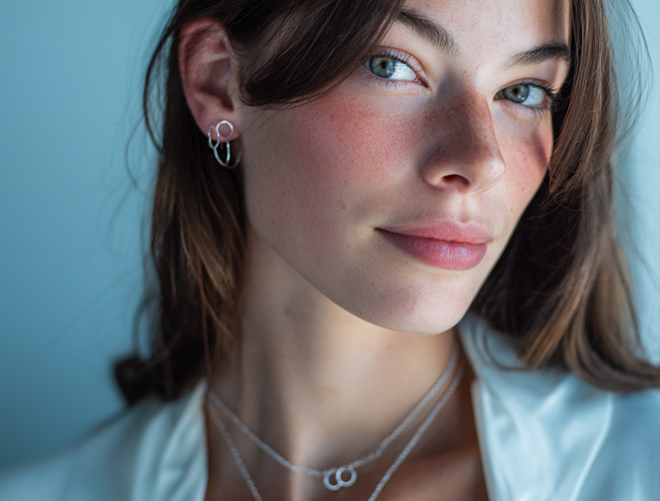
Cool undertones benefit from clean whites. Platinum 950 or 18-karat white gold rhodium-plated enhances pink or porcelain skin, especially near the face. 925 silver suits everyday budgets and adds a soft, graphic line against navy, charcoal, and crisp white shirts. A low-profile bezel around aquamarine, sapphire, or spinel keeps the look sharp without glare. Strong daylight reveals how cool metals lift redness rather than amplify it.
What to do with neutral undertones
Neutral skin reads balanced under different lights. A simple rule helps: keep one metal dominant and use the other as an accent. For example, two 14-karat yellow gold chains with a small platinum 950 pendant near the collarbone. Earrings determine the “lead” when mixing; studs in white metal allow a cooler read, hoops in yellow metal tip the look warm. Consistency in clasp and findings color avoids unintended breaks in the composition.

Texture, finish, and reflection
Finish influences how metal interacts with skin tone. High polish intensifies contrast and catches light quickly, which suits evening settings. Satin or brushed surfaces reduce glare and feel understated for daytime. Hammered textures add micro-facets that scatter light, softening strong undertones. A warm wrist with a satin 14-karat bangle reads refined, while cool skin gains clarity from a polished 925 silver cuff. This shows that finish choice can fine-tune the result as precisely as metal color.
Gemstones that support the metal choice
Color strategy matters. Warm palettes align with citrine, Madeira topaz, hessonite garnet, and champagne diamonds set in yellow or rose alloys. Cool palettes resonate with sapphire, tanzanite, blue spinel, or icy diamond melees set in white metals. Neutrals can repeat one accent twice – earrings and ring, or pendant and bracelet – to keep the eye reading the set as intentional. A 5–7 mm bezel-set stone keeps color close to the skin for a reliable test.
How to test at home before buying
Evaluate pieces in daylight near a window, not under warm incandescent bulbs. Hold a 45–50 cm chain or a stud earring close to the face; step back from the mirror to judge overall balance. Place metal against a neutral top – white for cool testing, ecru for warm testing – to avoid color contamination from clothing. Photograph the result on a phone in natural light and compare images rather than impressions. Clear comparisons prevent second-guessing later.
Working with trends responsibly
Minimalist stacks, recycled alloys, and lab-grown diamonds can align with any undertone when proportion and color stay consistent. Recycled 14-karat gold retains the exact metallurgical qualities of newly mined gold while reducing extraction impact. Lab-grown diamonds graded for cut, color, and clarity offer a bright, traceable option in white settings. Selecting a trend that respects your palette ensures longevity beyond a season.
Care that preserves appearance
Surface tone looks best on clean metal. Wipe 14-karat gold, platinum, and silver with a soft microfiber cloth after wear. Use mild soapy water for routine cleaning, then rinse and dry thoroughly. Avoid chemical detergents and store pieces in separate soft pouches to prevent abrasion. Keep pearls and opals away from ultrasonic machines; avoid ultrasound for oiled emeralds and fracture-filled stones. Consistent care sustains color, luster, and the precision of settings.
A grounded insight
Choosing between gold and silver becomes straightforward once undertone, finish, and gemstone color align. Warm skin glows with yellow or rose alloys, cool skin gains clarity from white metals, and neutral tones balance both with measured proportions. Thoughtful testing in natural light turns metal into a fluent extension of complexion – quiet, precise, and enduringly personal.